
This program offers dedicated support to get resilience work done.
Communities across Lake Superior’s coastal counties are experiencing new environmental realities—intensified storm events, shifting seasonal cycles, and growing pressures on infrastructure. These changes impact livelihoods, ecosystems, and everyday life, making resilience and preparedness more essential than ever.
As a community leader in the northern tier of Wisconsin, you may be one of the many local decision-makers motivated to take action—building resilience, preparing for emerging environmental realities, and ensuring your community remains strong and adaptable.


Resilience work takes time and resources
Finding the dedicated time and capacity to proactively address environmental challenges with limited resources can be difficult. The Enduring Lake Superior Communities program provides a yearlong structured opportunity for Northern Wisconsin community teams to receive guidance and support while working on a chosen resilience-focused goal or project.
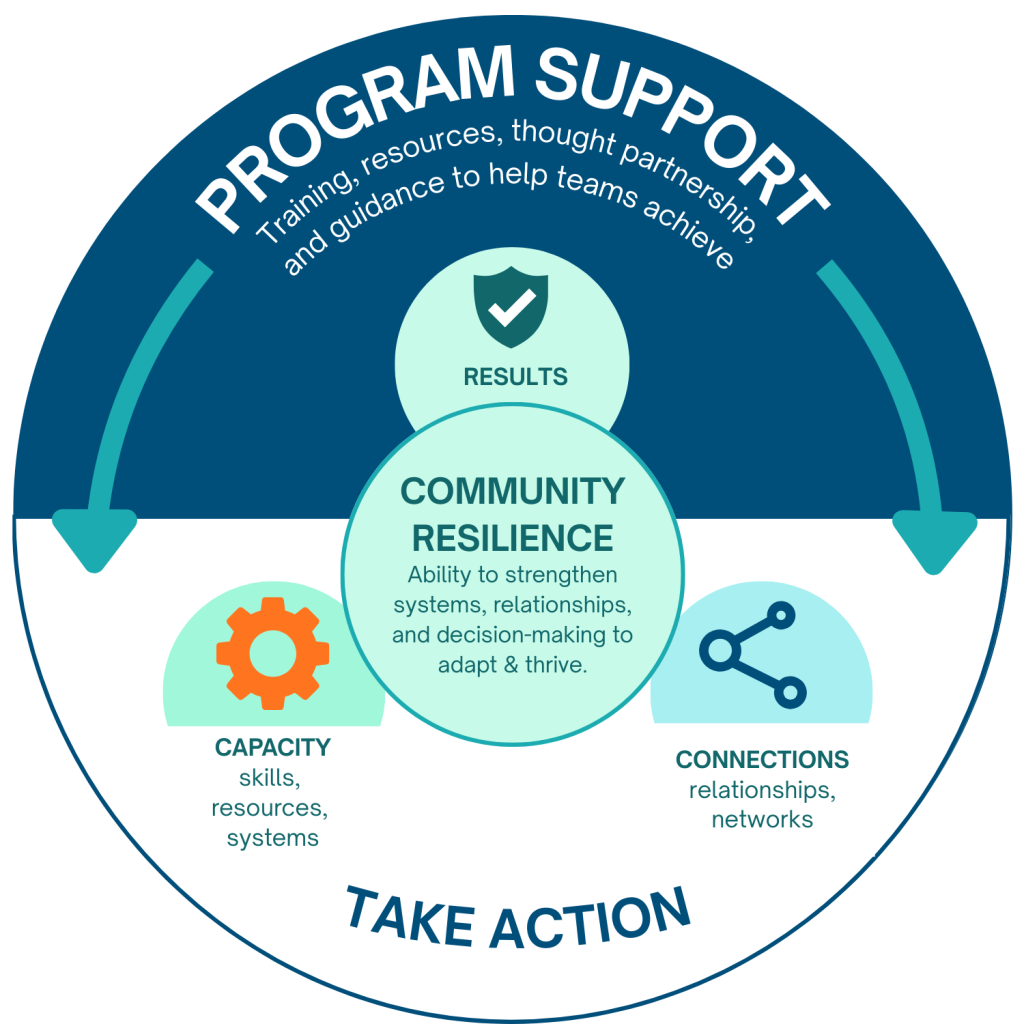
When we say resilience, we mean the ability of your community to strengthen its systems, relationships, and decision‑making so it can adapt and thrive as environmental conditions change. It’s about building the capacity, connections, and momentum that help your community shape the future you want.
When you apply for this program, you come in with a project, end goal, or idea in mind for an action that will make your community more resilient in the face of environmental change. By the end of one year, our objective is that Enduring Lake Superior Communities teams will have made substantial progress toward a chosen resilience action or goal with assistance and resources provided by the program.
In addition to the expertise of our program staff and our connections to statewide and national resources, your team will have access to a program budget of $2,000 as well as planning tools, information, facilitation support, and assistance in navigating progress toward resilience strategies that are important to your team and your community. Together, we determine a project scope that is achievable and an approach that fits with your community – and then our program staff works alongside you to get things done!
What your community gets out of the program:
- Yearlong technical support and a small budget to advance your community’s chosen resilience work.
- An opportunity to connect with other communities and develop shared experience and learning dedicated to resilience action.
- Flexibility to determine what goals to work on and a pace that aligns with your team’s workstyle.
How has this program already helped northern Wisconsin communities?
Since 2021, two cohorts have been through this program. Here are some reflections on their experience, in their own words.

The program opened up a couple of projects that have been on the back burner in my mind.

The program provided the expertise and up to date science to help our community develop an extreme weather preparedness plan. The grant can be used for such a wide range of ideas to address community needs.

The program staff really helped move our big picture project into manageable step by step pieces. Their experience with other projects and program areas kept us focused on producing a usable end project.
Project ideas and examples
What can this program do for your community? Here are some examples drawn from past projects that outline specific supporting roles that our program staff can play:
| Resilience Need | What We Can Do | Examples |
|---|---|---|
| Get Started with Assessment and Planning | Use existing tools to help your community prepare for environmental change. | – Flood Resilience Scorecard – NIACS Great Lakes Coastal Adaptation Menu |
| Design New Tools | Collaborate to build a new system or tool that helps your community manage impacts from extreme weather. | – New system to document infrastructure issues – Revised strategy or procedure |
| Writing and Revising Plans | Assist in drafting or revising local plans to address resilience or emerging challenges. | – Community preparedness plans (e.g., Town of Marengo Emergency Preparedness & Action Plan) – Resilience elements within existing plans |
| Engaging Community | Develop ways to connect with residents about resilience issues, share information, and foster relationships. | -Organize community gatherings -Design community surveys |
| Creative Communications | Help craft targeted messaging and resources for resilience actions or projects. | – Informational resources or signage – Topical trainings |
All communities have different priorities and capacities where resilience work is concerned. You are not limited to the ideas and examples presented here. Wherever your community is at, we look for ways to support the resilience goal you bring into this program.
Apply for the program
Teams who wish to participate in the Enduring Lake Superior Communities program must apply by 5 p.m. (CST) on April 10, 2026. We will select multiple teams for the 2026-27 cohort. Teams will be selected based on resilience action readiness and alignment of needs with program resources. Selected teams will be notified in May 2026.
The application format is a survey. It is intended to be short and easy to complete in one sitting. If you wish to see the application questions before entering the application form, you may view a copy here.
Program eligibility
Participating teams must be based in the four coastal counties of northwest Wisconsin (Douglas, Bayfield, Ashland or Iron counties).
To participate in this program, you must apply as a team of 2-4 eligible members from your community or jurisdiction. Eligible members will be people in community decision-makers roles. These may include:
- Local (city, town, village), tribal or county government staff of any department
- Elected local officials (chairpersons, council members, commissioners, mayors, clerks, etc.)
- Members of local, tribal, or county boards or committees, or regional intergovernmental committees
Note: Cross-jurisdictional teams may also apply.

Questions about the program, or the application process?
- At any time, we welcome questions you may have about participating in the program, or the opportunity to talk through your project idea before you submit an application. Reach out to Karina Heim (karina.heim@wisc.edu) to schedule time to discuss your questions with our program staff.
Watch the July 1, 2025 program informational webinar:
About the program staff
Karina Heim is a former community planner and the Coastal Training Program Coordinator at the Lake Superior National Estuarine Research Reserve. In that role, Karina develops training events and technical assistance that help decision makers take informed and inspired actions to protect coastal areas and communities. Karina has a professional background in land use planning and program coordination, completing her master’s degree in urban and regional planning at the University of Minnesota’s Humphrey School in 2016.
Melissa Burke is the Resilience Specialist at the Lake Superior National Estuarine Research Reserve. In her role, she supports the Reserve’s Coastal Training Program and the Stewardship Program through outreach, engagement, and field work. She has a multi-faceted professional background ranging from landscaping to public outreach, and holds a bachelor of Fine Arts degree from the University of Wisconsin-Eau Claire, and a bachelor of science in Natural Resource Management from the University of Wisconsin-Stevens Point.

Dr. Natalie Chin is Wisconsin Sea Grant’s Lake Superior Field Office outreach specialist. She is focused on bringing useful information to communities, especially northern Wisconsin. Her current work includes co-leading a statewide Tourism and Outdoor Recreation Working Group and co-organizing local bird observing events that aim to help reduce barriers to coastal spaces. She serves as one of the North Central Region representatives for the National Extension Tourism (NET) Network and a member of the Wisconsin Council on Tourism. She has a PhD in Agricultural and Biological Engineering from Purdue University.

We value creating a welcoming and respectful environment for all, and are committed to providing access and reasonable accommodations for full participation in this program. Please reach out to us if you have any questions or concerns about your participation in this program.

